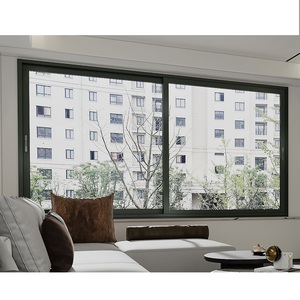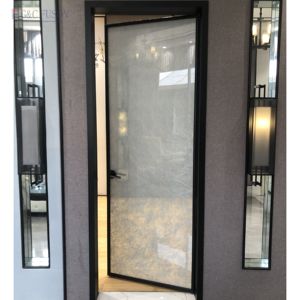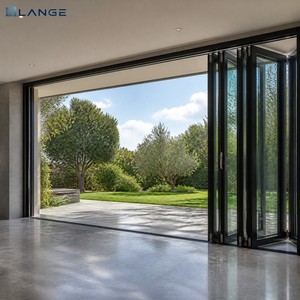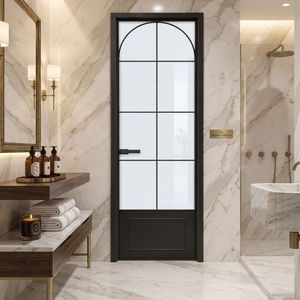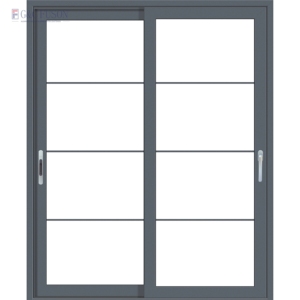
China Best Aluminum Framed Glass Doors Manufacturers & Exporters

An Industrial Whitepaper & Strategic Sourcing Guide on High-Performance Architectural Glazing Systems, Thermal Efficiency Standards, and Factory-Direct OEM/ODM Manufacturing

Engineered Architectural Systems & Product Catalog

Explore our factory-direct aluminum frame glass door and window systems, engineered to pass stringent NFRC, AAMA, and CE standards for global commercial and luxury residential projects.

26 Steps
Rigorous Production Workflow for Every Custom Unit
4 Stages
Full-Cycle Quality Control & Hydro-Pressure Testing
Up to 50%
Direct Factory Cost Advantage over Third-Party Dealers
NFRC / AAMA
Compliance Engineered for Global Thermal & Wind Load Specs

Corporate Manufacturing Excellence & Direct Factory Advantage

Understanding the engineering capabilities, quality assurance protocols, and economic benefits of partnering directly with China's leading architectural aluminum door and window fabricators.

Eliminating Middleman Markups (Up to 50% Sourcing Efficiency)

Traditional procurement of architectural glazing systems involves multiple layers: export trading firms, regional distributors, local wholesalers, and installation contractors. Each layer adds a 15% to 35% margin markup without adding technical value to the product itself.

By establishing direct collaboration with premier Chinese manufacturing hubs (such as Foshan Industrial Metallurgy Cluster), project developers, architects, and facade contractors eliminate redundant intermediary costs. Direct factory sourcing unlocks up to 50% cost optimization, enabling developers to reallocate budget toward upgraded glass specifications (e.g., Triple-pane Low-E, SGP laminated safety glass) or premium German-engineered hardware systems (Hoppe, Siegenia, Sobinco).

Certified Testing & Structural Engineering Standards

Export-grade Chinese manufacturers do not simply produce profiles; they engineer custom facade systems certified to international building codes:

  • AAMA 101 / WDMA / CSA: Air infiltration testing, water penetration resistance under static and dynamic pressure (up to 720 Pa), and structural design loading.
  • NFRC Thermal Rating: Calculation of total window U-factors (≤ 0.22 Btu/h·ft²·°F), Solar Heat Gain Coefficient (SHGC), and Visible Transmittance (VT).
  • CE Mark (EN 14351-1): Full compliance with European safety, mechanical resistance, and acoustic dampening (STC values up to 45 dB).

The 26-Step Precision Fabrication Workflow & 4-Stage QC Protocol

Achieving architectural perfection requires strict industrial discipline. Our manufacturing process enforces a 26-step automated extrusion and assembly workflow monitored by 4 mandatory Quality Control inspection gates:

Stage 1: Raw Profile & Alloy Verification

Spectrographic analysis of incoming primary aluminum billets (Alloy 6063-T5 / 6061-T6). Inspection of wall thickness tolerances (+/-0.15mm) and tensile yield strength before extrusion machining begins.

Stage 2: Precision CNC & Miter Joint Milling

Multi-axis automated CNC milling for lock mortises, drainage slots, and corner cleat mitering. Miters are joined with dual-component epoxy injection and mechanical crimping to ensure zero structural twist.

Stage 3: Thermal Barrier & Glazing Integration

Insertion of glass-fiber reinforced Polyamide (PA66 GF25) thermal break strips, followed by automated EPDM gasket insertion and IG Unit structural silicone glazing under controlled humidity.

Global Sourcing Trends: The Future of Buying Aluminum Doors from China

A strategic analysis for global procurement directors, general contractors, and real estate developers navigating architectural supply chains over the next decade.

1. Shift to Low-Carbon & Recycled Aluminum Extrusions

Environmental standards (such as Europe’s CBAM and US LEED green building certifications) are driving demand for low-carbon primary aluminum. Top Chinese exporters are adopting hydro-powered aluminum smelting and post-industrial recycled billets, reducing embedded carbon footprints from 18 kg CO2/kg Al down to less than 4.5 kg CO2/kg Al without compromising structural tensile capacity.

2. BIM Integration & Digital Twin Customization

The days of generic catalog ordering are over. Leading Chinese suppliers provide full Building Information Modeling (BIM) files (Revit, IFC formats) and 3D shop drawings during the pre-tender stage. This digital workflow allows engineering teams to perform clash detection, thermal boundary simulations, and wind load modeling long before physical profile extrusion begins.

3. DDP & Modular Containerized Logistics

Modern B2B door procurement relies on streamlined global delivery. Leading Chinese manufacturers now offer turn-key DDP (Delivered Duty Paid) logistics utilizing custom steel-frame ocean crates. Units arrive pre-glazed, pre-assembled, and numbered according to architectural floor plans, reducing job-site installation labor costs by over 40%.

Technical Specification Matrix: Material Selection Guide

A comparative breakdown of key material variables when specifying high-performance aluminum framed glass door systems:

Engineering Factor Standard Commercial Grade High-Performance Architectural Grade Ultra-Luxury / Extreme Climate Grade
Aluminum Alloy & Temper 6063-T5 (1.4mm - 1.6mm wall) 6063-T6 (2.0mm - 2.5mm wall) 6061-T6 High-Strength Structural Alloy
Thermal Barrier Type Standard PVC Strip (14.8mm) Polyamide PA66 GF25 (24mm - 34mm) PA66 GF25 + Aerogel / Foam Infill (>39mm)
Surface Coating System Standard Powder Coating (60μm) Fluorocarbon PVDF 3-Coat Paint (>40μm) Super-Durable PVDF / Hard Anodized (25μm)
Glass Assembly (IGU) 5mm + 12A + 5mm Double Tempered 6mm Low-E + 16Ar + 6mm Toughened 8mm Low-E + 16Ar + 8mm Laminated (SGP)
Target Thermal Value U-Value: 2.8 - 3.2 W/m²K U-Value: 1.4 - 1.8 W/m²K U-Value: ≤ 0.8 - 1.1 W/m²K (Passivhaus)
Acoustic Isolation Rating STC 28 - 32 dB STC 35 - 40 dB STC 42 - 48 dB

Evolution & Manufacturing Technology Trends

How innovations in structural engineering, ultra-slim sightlines, and smart motorization are shaping next-generation glass door systems.

1. Micro-Slim Frame Sightlines (<20mm Visible Vertical stile)

Architectural design strongly favors minimal frame exposure to maximize daylight autonomy. Modern extrusion techniques allow structural loads to be transferred entirely to the glass unit through structural silicone bonding. Interlocking vertical stiles are reduced to as thin as 18mm to 21mm while supporting panel weights up to 500 kg.

2. Magnetic Levitation & Smart Motorized Drives

High-end residential patio doors and commercial entrance systems are increasingly incorporating concealed magnetic levitation (Maglev) drive motors. Operating at noise levels under 35 dB, these systems offer touchless sensor opening, smartphone app integration, and automatic safety anti-pinch technology.

3. Extreme Weather & Hurricane Impact Glazing

Driven by rising global weather volatility, manufacturers are integrating hurricane impact-rated laminated glass with SentryGlas® (SGP) interlayers. Combined with heavy-duty multi-point locking hardware, these doors withstand wind pressures exceeding 5000 Pa and missile impact tests (ASTM E1886/E1996).

4-Stage Comprehensive Quality Assurance Framework

Gate 01

Raw Material Audit

Verification of aluminum alloy chemical composition, powder coating adhesion tests (cross-hatch test), and glass flatness audits.

Gate 02

Dimensional Tolerance

Laser inspection of profile miters, diagonal squareness (≤1mm deviation), and corner crimping mechanical shear strength.

Gate 03

Environmental Mockup

Pressurized air leakage, water penetration chamber testing, and cycle testing of rollers and locking hardware (20,000+ cycles).

Gate 04

Export Packaging

Application of anti-scratch protective film, corner guards, and vacuum-sealed moisture barrier packaging in fumigated wooden crates.

Frequently Asked Questions (FAQ) for B2B Sourcing

Addressing technical, logistical, and commercial inquiries from architects, builders, and importers.

Why choose Chinese aluminum door manufacturers over European or domestic fabricators?

China's architectural aluminum industrial clusters (such as Foshan and Guangdong province) combine complete supply chain integration with advanced multi-axis CNC automation. This allows buyers to access world-class extrusions, European hardware integration (e.g., Hoppe, G-U, Roto), and custom engineering flexibility at direct factory costs—saving up to 50% compared to European fabricators while meeting identical AAMA, NFRC, and CE performance standards.

How do thermal break aluminum doors compare to standard non-thermal break profiles?

Non-thermal break aluminum profiles conduct heat and cold rapidly, leading to high HVAC energy loss and interior condensation. Thermal break systems insert a low-conductive Polyamide strip (PA66 GF25) between the inner and outer aluminum extrusions. This breaks the thermal bridge, improving frame U-values by over 60% and preventing surface condensation even in freezing winter conditions.

What are the minimum ordering quantities (MOQ) and lead times for custom project orders?

Because every architectural project requires unique dimensions and finishes, flexible factory lead times are standard. For engineered custom profiles, shop drawing approval typically takes 5–7 working days, followed by a 25–35 day production cycle. Flexible MOQs are available for wholesale distributors, commercial developments, or single high-end custom residential projects.

How do you prevent glass breakage and frame damage during long-distance ocean freight?

All finished units undergo export-grade protective wrapping: protective PE film on aluminum frames, rigid corner edge guards, shock-absorbing foam spacers between glass panes, and fully enclosed steel-reinforced plywood crates. Crates are loaded with moisture desiccants and strapped directly into ocean containers to withstand heavy seas.

Are product certification test reports available for structural and thermal engineering compliance?

Yes. Complete third-party laboratory test reports (including NFRC thermal performance ratings, AAMA structural air/water tightness tests, and CE compliance certificates) can be provided for specified product lines to assist with local municipal building code approvals.

Can custom surface finishes be matched to specific architectural color swatches (e.g., RAL colors)?

Absolutely. Modern powder coating and PVDF fluorocarbon spraying lines can match any standard RAL color code, metallic texture, wood grain effect, or custom anodized finish (such as Champagne, Matte Black, or Bronze Anodized) with 10 to 25 year exterior weatherability guarantees.

Start Your Next Architectural Glazing Project Today

Partner directly with China's leading aluminum framed glass door manufacturer. Submit your architectural drawings, elevation schedules, or custom specifications for an engineering review and direct factory quote.