Direct OEM Manufacturing Portfolio
Featured Architectural Aluminum Fenestration & Door Systems
Engineered to exceed NFRC, AAMA, CE, and AS2047 performance benchmarks. Sourced directly from modern precision production lines in China.
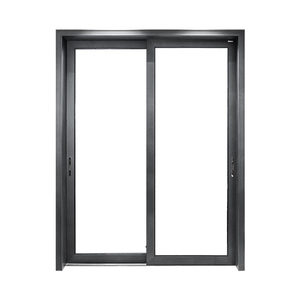
NFRC Soundproof & Hurricane Impact Aluminum Sliding Door
View Product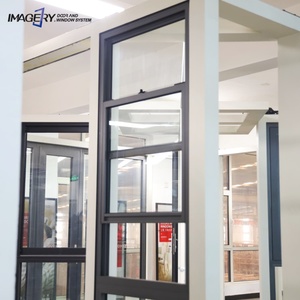
Wholesale Powder Coated Soundproof Aluminum Hung Window
View Product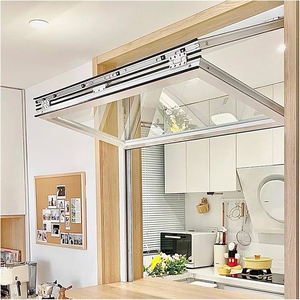
Vertical Hidden Folding Glass Door & Bar Partition Window
View Product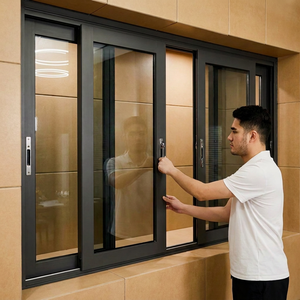
Heavy-Duty Aluminum Balcony Sliding Window & Door System
View Product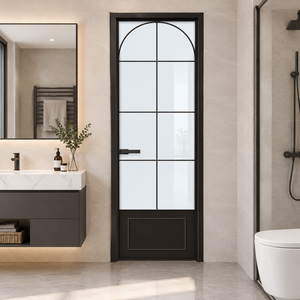
Waterproof Moisture-Proof Interior Aluminum Casement Door
View Product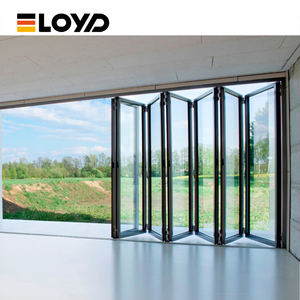
Exterior Powder Coated Tempered Glass Bifold Patio Door
View Product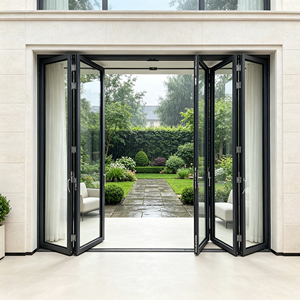
Energy Saving Hurricane Impact Double Glazed Bi-Fold Door
View Product
Strategic Sourcing Analysis
Navigating China’s Aluminum Front Door Manufacturing Ecosystem
Industrial Metallurgy & Profile Extrusion Standards
China commands over 55% of global primary aluminum extrusion processing capacity. Premier manufacturing hubs in Foshan, Guangdong, utilize 6063-T5 and 6063-T6 architectural grade aluminum alloys. These alloys are specifically engineered with precise magnesium and silicon ratios to guarantee structural yield strengths surpassing 110 MPa. For commercial developers and residential wholesalers, sourcing directly from high-capacity factories ensures access to advanced multi-cavity thermal break designs featuring PA66 GF25 (25% glass-fiber reinforced polyamide) insulating strips.
Surface Treatment Engineering & Weather Resistance
Facade resilience against marine corrosion, UV degradation, and thermal stress depends heavily on modern surface treatments. China’s top OEM manufacturers operate automated fluorocarbon (PVDF / Kynar 500) spraying lines and Qualicoat-certified electrostatic powder coating systems. Delivering coating thickness tolerances between 60 to 120 microns, these finishes ensure high-traffic entry doors withstand 3,000+ hours of neutral salt spray testing (ASTM B117 compliance) without blistering, chalking, or color shifting.
Information Gain Insight for Specifiers: Sourcing high-end aluminum front doors direct from tier-one factories eliminates up to 30%–50% in middleman distributor markups while securing total control over glass build-ups (Low-E, argon filled, SGP laminated hurricane impact glass) and hardware integrations (German Hoppe, Siegenia, or custom multi-point smart locks).
Manufacturing Excellence
Why Direct-from-Factory OEM/ODM Synergies Outperform Traditional Supply Chains
26-Step Production Mastery
Every single entry system passes through a rigid 26-step automated workflow—ranging from double-mitre CNC aluminum cutting and hydraulic corner crimping to EPDM gasket vulcanization and protective film lamination.
4-Stage Strict QA/QC Protocol
Defect prevention is enforced through incoming raw material testing, structural miter joint load verification, hardware air/water tightness bench testing, and pre-shipment dry-fit assembly checks.
Wholesale Financial Advantage
Bypassing dealer networks allows real estate developers, building material wholesalers, and architectural contractors to optimize procurement budgets, reinvesting capital into upgraded acoustic or bullet-resistant glazing options.
Industry Horizon
Future Sourcing & Architectural Trends for Aluminum Front Doors
Analyzing technological shifts, energy codes, and design trends shaping global fenestration procurement over the next decade.
1. Ultra-Slim Sightlines & Oversized Pivot/Sliding Systems
Modern architectural design prioritizes maximum glass surface ratios and uninterrupted indoor-outdoor flow. Future front door procurement is rapidly pivoting toward heavy-duty aluminum pivot doors and minimalist multi-panel sliding configurations capable of supporting panel weights up to 500 kg (1,100 lbs) per leaf. Achieving smooth operation at this scale requires high-precision bottom-concealed hydraulic pivots, stainless steel multi-track rollers, and high-moment-of-inertia aluminum profiles.
2. Decarbonization & Low-Carbon Recyclable Alloys
With green building rating systems such as LEED v4.1 and BREEAM mandating strict Embodied Carbon limits, global purchasers are demanding secondary/recycled aluminum content verification and Environmental Product Declarations (EPDs). Leading Chinese factories are shifting toward green hydro-powered aluminum smelting processes, producing extrusions with carbon footprints below 4.0 kg CO2e/kg Al, vastly outperforming legacy fossil-fuel powered smelters.
3. Smart Access Integration & Biometric Ecosystems
The traditional mechanical lock keyway is rapidly being replaced by multi-modal electronic access control systems fully integrated into the door profile during factory extrusion assembly. Modern export-grade front doors come pre-wired for facial recognition scanners, 3D capacitive fingerprint sensors, Bluetooth LE/NFC access, and motor-driven multi-point deadbolts that seamlessly connect with mainstream Smart Home Automation protocols (Matter, Zigbee, Z-Wave).
4. Advanced Thermal Performance & Passive House Standards
As international energy codes enforce lower U-factor mandates (e.g., U-values ≤ 0.8 W/m²K for extreme northern climates), Chinese fenestration factories are embedding wider multi-chamber thermal breaks (up to 39mm PA66 strips) filled with expanded polyurethane (PUR) or aerogel insulation foam, coupled with triple-pane or vacuum-insulated glass (VIG) units.
Procurement Strategy Matrix
Direct Factory OEM vs. Regional Distributors vs. Sourcing Intermediaries
| Evaluation Parameters | Direct China OEM/ODM Factory | Local Regional Distributor | Trading Companies / Agents |
|---|---|---|---|
| Unit Cost Structure | Factory Floor (Baseline Cost) | +40% to +100% Distributor Markup | +15% to +35% Agent Commission |
| Custom Engineering Flexibility | Full CAD/BIM Die Creation & Extrusion Customization | Restricted to In-Stock Standard Sizes | Dependent on Subcontracted Factory |
| Quality Control Oversight | Direct Access to 4-Stage Production Inspection Reports | Third-Party Warranty Layer Only | Variable / Indirect Control |
| Compliance & Certification Data | Direct Mill Test Certificates (MTC), NFRC, AAMA, AS2047 | Repackaged Regional Summary Data | Often Relies on Factory Samples |
| Lead Times (Custom Orders) | 20 - 35 Days Production Lead Time | Immediate for Stock / 60+ Days Backorder | 30 - 50 Days (Loss in Communication) |
Technical Sourcing Knowledge Base
Frequently Asked Questions (FAQ) for Global Procurement Officers
What alloy and temper specifications should I specify when sourcing custom aluminum front doors?
For architectural entry doors and structural fenestration systems, always specify 6063-T5 or 6063-T6 aluminum alloy. T5 temper provides ideal dimensional accuracy and surface smoothness for powder coating or anodizing, while T6 offers higher tensile strength suitable for high-load pivot doors or hurricane-rated curtain wall entries. Avoid non-standard commercial alloys that lack mill certification.
How do thermal break aluminum entry systems differ from non-thermal break systems?
Standard aluminum is a natural thermal conductor. A non-thermal break frame transfers heat or cold directly between the exterior and interior, leading to energy loss and interior condensation. A thermal break door system structurally separates the interior and exterior aluminum profiles using a low-conductive polyamide strip (PA66 GF25). This thermal barrier significantly reduces the U-factor, preventing condensation and helping buildings satisfy modern energy conservation codes.
What surface coating standard is required for coastal or high-salinity installation sites?
For installations located within 3 km (2 miles) of coastal salt-water environments, specify PVDF (Polyvinylidene Fluoride / Kynar 500) 3-coat fluorocarbon finishes complying with AAMA 2605 standards, or anodized finishes with a minimum thickness of 20 microns (Class I Anodized). These coatings resist salt spray corrosion, severe atmospheric pollution, and high UV exposure without chalking or peeling.
How are glass specifications configured for hurricane impact zone compliance?
Hurricane impact doors utilize laminated safety glass comprising two tempered glass panes bonded around a high-durability interlayer, such as SentryGlas® (SGP) or specialized Polyvinyl Butyral (PVB). For Florida Building Code (FBC) or High Velocity Hurricane Zone (HVHZ) compliance, systems must pass large missile impact tests (ASTM E1886/E1996) and cyclic wind pressure differential testing.
What is the typical Minimum Order Quantity (MOQ) and lead time for wholesale direct factory orders?
Standard factory MOQs typically range from 20 square meters for custom residential projects to 1x20GP container loads (~150–200 sqm) for commercial projects. Production lead time averages 25 to 35 business days following shop drawing approval and color sample sign-off. Express production options may be available for time-sensitive commercial contracts.
How do Chinese manufacturers pack aluminum doors to prevent transit damage during sea freight?
Export packaging complies with international B2B freight standards. Aluminum frames are wrapped in anti-scratch protective film, cushioned with corner guards, and wrapped in EPE foam. Complete door units or knockdown (KD) frames are secured inside fully enclosed plywood crates (ISPM-15 fumigation-free compliant) and strapped with steel banding to prevent shifting inside shipping containers.
Can the factory support custom CAD, BIM models, and architectural shop drawings?
Yes, dedicated OEM factories employ in-house structural engineering teams capable of converting client architectural schematics into detailed CAD shop drawings, 3D Revit BIM models, and cross-sectional profile views for structural approval prior to aluminum extrusion tooling and cutting.
How can buyers verify the quality and structural performance before shipping?
Procurement teams can request Factory Acceptance Testing (FAT) video documentation, review third-party mill certificates (MTC), or commission independent inspection agencies (SGS, TUV, Intertek) to perform pre-shipment inspections covering coating thickness, dimensional accuracy, hardware operation, and water penetration testing.
Accelerate Your Project Sourcing with Direct Factory Engineering
Access technical CAD drawings, detailed extrusion catalogs, custom color swatches, and direct wholesale pricing for your upcoming commercial or residential development projects.
Get Catalog