Factory-Direct Catalog
Engineered Aluminum Kitchen Door Systems
Discover our specialized collection of kitchen partition doors, ultra-narrow sliding systems, soundproof acoustic dividers, and heavy-duty bi-fold entryways crafted for modern residential and commercial interiors.
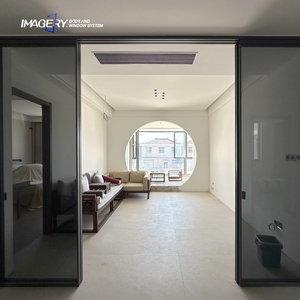
Simple Design Extremely Narrow Frame Aluminum Sliding Door Wide View for Kitchen Living Room
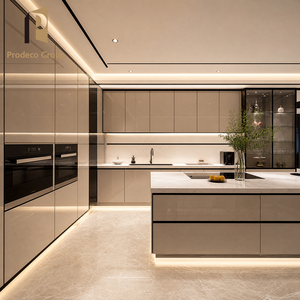
Glass Front Kitchen Cabinet Display Door Aluminum Frame Modern Style Villa Custom Project Kitchen Cabinets
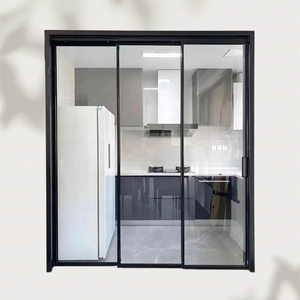
Custom Size Aluminum Alloy Tempered Glass Sliding Door, Custom Made Interior Sliding Door for Kitchen Balcony
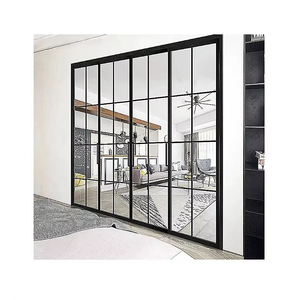
Fuson Aluminum Alloy Double Glass Sliding Folding Door With Screen Interior Accordion Kitchen Bi Fold Door
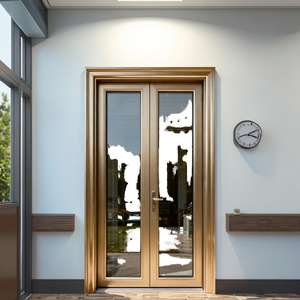
Swing Opening Thermal Break Aluminum Alloy Doors for Interior Heat Insulation in Hotels Apartments Bathrooms Kitchens
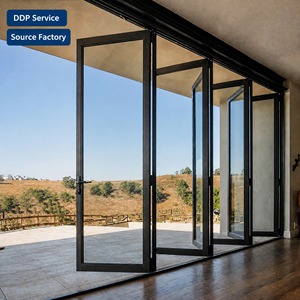
Child Safe Aluminum Folding Doors with Smooth & Reliable Movement Waterproof for Bathroom Kitchen & Courtyard
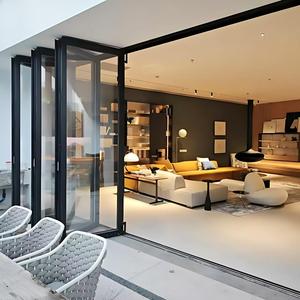
High Quality Aluminium NFRC Certificate Patio 10 ft Bifolding Doors with Tempered Safety Double Glass for Kitchen
Technical Whitepaper: The Evolution of Custom OEM Aluminum Kitchen Doors in Modern Architecture
In contemporary spatial design, kitchen enclosures have transitioned from purely functional utility barriers into sophisticated architectural centerpieces. As open-plan living continues to dominate luxury residential and commercial hospitality design, the demand for high-performance custom OEM aluminum kitchen doors has escalated exponentially. B2B buyers, architectural specifiers, and global wholesalers are increasingly seeking door systems that offer a delicate balance: providing complete acoustic and oil-fume containment while preserving visual transparency, daylight penetration, and structural elegance.
Unlike traditional timber or PVC interior doors, architectural-grade 6063-T5 aluminum alloy frame systems deliver unrivaled dimensional stability, resistance to high-humidity kitchen environments, and the structural capacity to support expansive tempered safety glass panels. As a specialized original equipment manufacturer (OEM), our facility bridges the gap between complex architectural blueprints and physical manufacturing execution.
1. Key Architectural Trends Shaping Kitchen Door Procurement
Global procurement metrics indicate a decisive shift in how real estate developers and building material wholesalers specify interior aluminum partitions and kitchen door systems. Below are the core technical trends driving the industry:
Ultra-Narrow Sightlines (16mm-20mm)
Minimalist micro-frame extrusions maximize glass surface ratios up to 92%, offering unobstructed panoramic views while effortlessly capturing natural daylight across living spaces.
Acoustic Damping & Fume Sealing
Advanced EPDM dual-gasket sealing combined with laminated acoustic glass delivers up to 38dB Sound Transmission Class (STC) ratings, fully isolating cooking noise and airborne grease particles.
Polyamide Thermal Break Technology
Integration of PA66-GF25 thermal barrier strips minimizes energy transfer between climate-controlled dining rooms and unconditioned utility or kitchen zones, meeting stringent Energy Star and NFRC criteria.
2. Material Science & Structural Metalwork Specifications
The operational longevity of a kitchen door system relies heavily on the metallurgical composition of its extrusion profiles and surface treatment engineering. Standard commercial aluminum often suffers from thermal distortion or surface oxidization under kitchen steam exposure. Our manufacturing process exclusively employs primary-grade 6063-T5 architectural aluminum billet, subjected to precise artificial aging to achieve a Webster hardness rating above 12 HW.
| Performance Characteristic | Primary Aluminum 6063-T5 (Our Standard) | Recycled / Standard Commercial Aluminum | Traditional Timber Frame Systems |
|---|---|---|---|
| Webster Hardness Index | ≥ 12 HW | 8 - 10 HW | N/A (Susceptible to warping) |
| Surface Finish Durability | Fluorocarbon PVDF / Anodized 15μm+ | Standard Powder Coating (<8μm) | Varnish / Paint (Requires refinishing) |
| Moisture & Steam Resistance | 100% Corrosion Resistant | Risk of pitting corrosion | High expansion and swelling risk |
| Glass Loading Capacity | Up to 300kg per sliding sash | Max 100kg per sash | Max 80kg (Deflection risk) |
| Acoustic Insulation (STC) | 35 - 42 dB (Double Insulated Glass) | 22 - 28 dB | 18 - 25 dB |
3. Future Global Procurement & Supply Chain Trends for B2B Importers
As global supply chains navigate fluctuating raw material prices and heightened environmental regulations, foreign importers, distributors, and general contractors must align with manufacturing partners who offer structural resilience. Future-ready procurement strategies focus on three primary pillars:
- Standardization of Customization (Modular OEM Engineering): Wholesalers are shifting toward modular profile systems that allow localized customization of glass fills (reeded glass, clear tempered, frosted, or smart electrochromic glass) while maintaining unified aluminum track and hardware inventories.
- Certifications & Regulatory Compliance: Strict adherence to North American NFRC and AAMA standards, alongside European CE and SGCC glass safety certifications, is non-negotiable for project approval in tier-1 commercial developments.
- Direct Factory Quality Control Transparency: Importers are circumventing middleman trading companies to establish direct digital access to factory-floor QA data, ensuring every batch passes dimensional tolerance checks prior to container loading.
Manufacturing Excellence
Why Partner With Our OEM Industrial Production Facility
By removing third-party broker markups, we deliver uncompromising architectural metalwork at factory-direct pricing—saving global project buyers up to 50% on procurement overhead.
01
Material Audit
Rigorous spectrographic verification of raw 6063-T5 aluminum billets and tempered safety glass stock.
02
CNC Precision
Multi-axis automated machining centers cut extrusions to sub-millimeter tolerances for seamless miter joints.
03
Thermal Bonding
Automated insertion of polyamide insulation strips ensuring structural integrity and climate barriers.
04
4-Stage QA
Comprehensive inspection covering coating thickness, hardware cycle endurance, water tightness, and soundproofing.
05
Export Packaging
Heavy-duty wooden crate enclosure with corrosion-inhibiting film for zero-damage global shipping.
Procurement Guidance
Frequently Asked B2B Procurement Questions
Critical answers for developers, architects, and wholesale buyers regarding custom orders, production timelines, hardware configurations, and shipping logistics.
Q1: What are your OEM/ODM capabilities for custom architectural kitchen door projects?
+
As a direct manufacturer, we offer full-scope OEM/ODM services. Our engineering team converts architectural CAD/BIM drawings into precise manufacturing schedules. We offer fully customized extrusion profile dimensions, powder-coated or anodized color matching (RAL color system), specialized glass types (including Low-E double glazing, reeded fluted glass, tinted, and smart privacy glass), as well as custom-branded hardware integration.
Q2: How does buying factory-direct yield up to 50% savings compared to regional distributors?
+
Traditional procurement chains involve multiple intermediaries including export brokers, regional wholesalers, local distributors, and retail showrooms—each adding margin markups (often 15-30% per tier) and logistics overhead. Purchasing directly from our production facility eliminates these middle layers. Furthermore, optimized bulk raw material purchasing and automated CNC extrusion lines significantly lower cost per unit.
Q3: What certified standards do your aluminum kitchen door systems comply with?
+
Our aluminum door and partition systems are engineered to meet global architectural building codes. Our thermal break profiles and insulated glass units pass rigorous testing under North American NFRC (National Fenestration Rating Council) and AAMA standards for air infiltration, water resistance, and thermal transmittance (U-factor). Additionally, glass components are certified under SGCC (Safety Glass Certification Council) and European CE standards.
Q4: What is the Minimum Order Quantity (MOQ) and standard production lead time for wholesale orders?
+
Our standard MOQ for OEM custom profiles is 50 square meters or a minimum order value suited for container consolidation. Standard manufacturing lead time ranges between 20 to 30 calendar days following shop drawing approval and deposit receipt. For large-scale multi-family development projects requiring phased job-site delivery, we establish customized production schedules.
Q5: How do you ensure the durability of aluminum door finishes in high-moisture kitchen environments?
+
Kitchen environments subject door frames to elevated humidity, water splashes, and cooking oil vapor. We utilize advanced surface treatment technologies including Fluorocarbon PVDF coating (AAMA 2605 compliant) and hard-coat anodizing (≥15 microns thickness). These finishes are cross-hatch adhesion tested and resistant to chemical cleaning agents, salt spray corrosion, and fading over decades of continuous use.
Q6: What hardware systems and roller carriages are implemented in your narrow sliding doors?
+
Smooth, effortless gliding operation is critical for oversized glass sliding doors. We equip our systems with heavy-duty stainless steel SUS304 tracks and precision-engineered concealed roller carriages rated for over 100,000 opening cycles. We offer soft-closing damping mechanisms to prevent door slamming, as well as flush pull handles and multi-point mortise locks tailored for sleek, modern aesthetics.
Q7: How are heavy aluminum glass doors packaged to prevent damage during ocean freight shipping?
+
All exported units undergo export-grade protective packing. Frames are wrapped in protective anti-scratch polyethylene film, edge-guarded with high-density foam buffers, and packed into fully enclosed fumigated plywood crates. Glass panels are separated with anti-vibration cork pads and secured against shifting to ensure 100% damage-free transit across sea freight containers.
Ready to Request an OEM Specification Quote or Factory Audit?
Consult directly with our structural engineering team today. Send us your project blueprints, elevation schedules, or custom profile requirements for a comprehensive factory-direct quotation within 24 hours.