Executive Whitepaper: Architectural Paradigm of Aluminum Clad Wood Windows
In modern high-end residential and commercial architecture, the fenestration envelope plays a dual role: serving as a primary defense against environmental thermal transfer while anchoring interior architectural aesthetics. Search engine intent data reveals that structural engineers, lead architects, and international real estate developers searching for a Top Trusted Aluminum Clad Wood Windows Exporter & Exporters require far more than basic product catalogs. They demand deep technical transparency regarding material composite mechanics, long-term durability metrics, and verified thermal transfer coefficients.
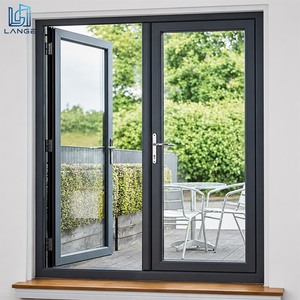
Aluminum clad wood windows represent the apex of hybrid fenestration engineering. By structurally marrying the interior luxury and thermal insulation of solid timber (such as sustainably sourced Larch, Pine, Oak, or Teak) with an exterior protective shield of heavy-duty extruded aluminum alloy (typically 6063-T5 profile grade), this system eliminates the historical single-material trade-offs between beauty and weatherability.
Information Gain Insight: The structural synergy of aluminum clad timber prevents thermal bridging while shielding interior organic wood fibers from UV degradation, ambient humidity fluctuations, and driving precipitation.
The Physics of Composite Fenestration: Wood Elasticity Meets Aluminum Tensile Strength
Unclad timber windows offer exceptional natural thermal resistance, with timber possessing a thermal conductivity ($\lambda$) of approximately $0.13\text{ W/m}\cdot\text{K}$. However, organic wood exposed to exterior atmospheric cycles undergoes hygroscopic expansion and contraction, leading to eventual seal failure, frame warping, and finish degradation. Conversely, all-aluminum windows offer superior structural yield strength ($> 180\text{ MPa}$) but require engineered thermal isolation strips to prevent excessive heat conduction.
The aluminum clad wood design solves this by establishing a mechanical float connection between the outer extruded aluminum shell and the inner solid wood frame. Using high-density polyamide nylon clips (PA66 GF25), the exterior aluminum expansion is physically decoupled from the interior wood core. This allows the exterior metal skin to expand and contract freely under extreme outdoor surface temperatures (ranging from $-30^\circ\text{C}$ to $+80^\circ\text{C}$) without exerting shear stress on the interior timber joints or deteriorating the double/triple-pane insulated glass unit (IGU) sealants.
Technical Performance Comparison Matrix
To assist procurement directors and project specifiers in evaluating envelope options, the following matrix outlines empirical performance data across standard fenestration frame materials under laboratory testing standards (AAMA/WDMA/CSA 101/I.S.2/A440 and NFRC 100/200).
As a leading exporter specializing in architectural fenestration, our operations eliminate traditional export agency markups while implementing strict quality engineering protocols. Partnering directly with an established exporter provides global clients with clear structural, financial, and logistical benefits.
26-Step Precision Manufacturing
Every window unit undergoes 26 automated and hand-finished production stages, including zero-tolerance CNC timber jointing, hydrophobic deep-wood immersion, and automated robotic frame sealing.
4-Tier Quality Inspection Protocol
Quality control operates independently across four checkpoints: Raw Profile Moisture & Grade Check, CNC Dimensional Tolerance Audit, Corner Assembly & Water-Tightness Chamber Testing, and Final Pre-Shipment Polish & Packaging Audit.
Up to 50% Direct Cost Savings
Bypassing regional dealer and distributor layers allows developers and architects to direct budget toward upgraded Low-E triple glazing, acoustic laminate interlayers, or premium motorization systems.
Architectural CAD/BIM Integration and Custom Engineering Support
Unlike standard off-the-shelf fenestration suppliers, a top trusted aluminum clad wood window exporter must possess advanced engineering capacity. Our technical design team collaborates directly with project architects via Building Information Modeling (BIM) workflows, providing Revit models, DWG cross-sections, and detailed structural load calculations for high-wind or earthquake-prone zones.
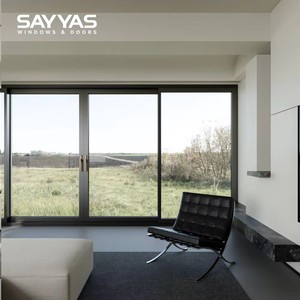
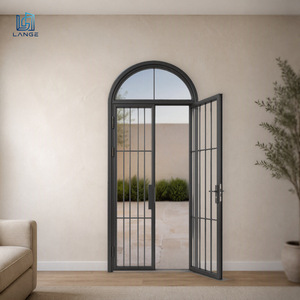
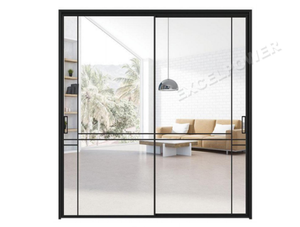
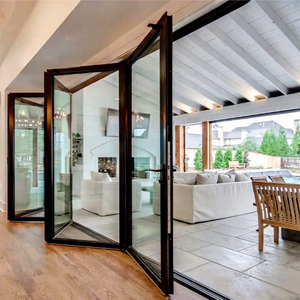
Whether your project calls for massive motorized multi-slide patio openings, classic arch-top French doors, or minimal-frame curtain wall integrations, our structural engineers review wind load dynamics (Pascal pressure resistance) to ensure complete compliance with local building codes across North America, Europe, Australia, and the Middle East.
Future Sourcing & Procurement Trends (2026–2030)
The global luxury fenestration industry is undergoing a structural shift driven by stringent municipal energy mandates (such as the EU Energy Performance of Buildings Directive and US California Title 24). As procurement leaders analyze long-term sourcing strategies, four primary macro trends emerge:
1. Transition to Vacuum Insulated Glass (VIG) & Ultra-Low U-Values
While standard energy-efficient windows utilize double or triple pane IGUs filled with 90% Argon gas, next-generation aluminum clad wood systems are integrating Vacuum Insulated Glass (VIG). By creating an airtight microscopic vacuum chamber between glass panes, thermal conductive transfer is practically eliminated, achieving center-of-glass U-factors as low as $0.060\text{ BTU/h}\cdot\text{ft}^2\cdot^\circ\text{F}$ ($0.34\text{ W/m}^2\cdot\text{K}$). This performance rivals solid insulated walls while remaining dramatically thinner and lighter.
Institutional property developers face mounting pressure regarding Scope 3 embodied carbon emissions. Export leaders must provide verifiable supply chain tracing. Sourcing timber certified by the Forest Stewardship Council (FSC) ensures wood is harvested from sustainably managed forests. Furthermore, water-based, non-toxic microporous coatings have replaced solvent-borne varnishes, guaranteeing interior air quality with zero volatile organic compound (VOC) off-gassing.
3. Smart Home Integration & Concealed Automation
The modern architectural aesthetic favors ultra-clean sightlines. The window industry is shifting toward fully concealed hardware, multi-point electronic lock systems, and integrated automated actuators. These components connect to Smart Building Management Systems (BMS), allowing windows to open automatically for ambient night-purging or seal shut in response to rain sensors and air quality monitoring metrics.
4. Enhanced Coastal & Hurricane Impact Resilience
Climate volatility has expanded high-velocity hurricane zones (HVHZ). Modern exported clad wood systems must incorporate SentryGlas (SGP) structural interlayers and heavy-duty 6063-T5 aluminum exterior cladding engineered to withstand missile impact tests (ASTM E1886/E1996) and extreme cyclic wind pressure testing without sacrificing interior timber warmth.
To assist trade buyers, importers, and project engineers during the RFP and technical evaluation stage, we have compiled detailed answers to common operational questions.
What structural guarantees prevent the exterior aluminum cladding from rotting the inner wood?
Our engineering utilizes a pressure-equalized rear-ventilation cavity between the extruded aluminum cladding and the inner wood profile. High-strength nylon clips isolate the materials, preventing direct metal-to-wood contact and creating a 3mm air channel. Any moisture from ambient condensation is drained through concealed base weep channels, eliminating wood rot risks.
How do factory-direct export operations save up to 50% compared to local dealers?
Traditional fenestration sales involve multi-tiered distribution networks: national importers, regional sales representatives, local dealer showrooms, and retail sales reps—each adding a 15–30% markup. By specifying directly with our manufacturing facilities, project developers work directly with factory engineers, cutting out intermediate distribution markups while securing custom CAD/BIM shop drawings.
Which wood species offer the best stability for international export shipping?
Laminated finger-jointed timber—such as Siberian Larch, European Pine, or American Red Oak—offers optimal stability. Multi-layer cross-grain lamination counteracts natural wood grain tension, resulting in a frame with high structural stability that resists warping during ocean transport through varying humidity zones.
Are your exported aluminum clad wood window systems NFRC, CE, and AAMA certified?
Yes. Our fenestration systems are engineered for international compliance and carry certified test reports for NFRC thermal performance (U-factor, SHGC, VT), AAMA air/water/structural load resistance, and European CE mark compliance. Complete test documentation is provided with project quotes.
How are fragile large-span glass and finished timber protected during ocean freight transport?
Units are packed using a heavy-duty 5-layer export protective system: low-tack protective film on all metal and wood surfaces, corner impact guards, vacuum-sealed moisture-absorbing shrink wrapping, and fully enclosed IPPC-certified fumigated wooden crates secured with steel banding to prevent container movement.
Partner With a World-Class Windows Exporter Today
Elevate your next architectural project with factory-direct aluminum clad wood windows, customized lift-and-slide glass walls, and hurricane impact-rated systems. Contact our technical engineering department for an immediate drawing review and competitive factory quote.